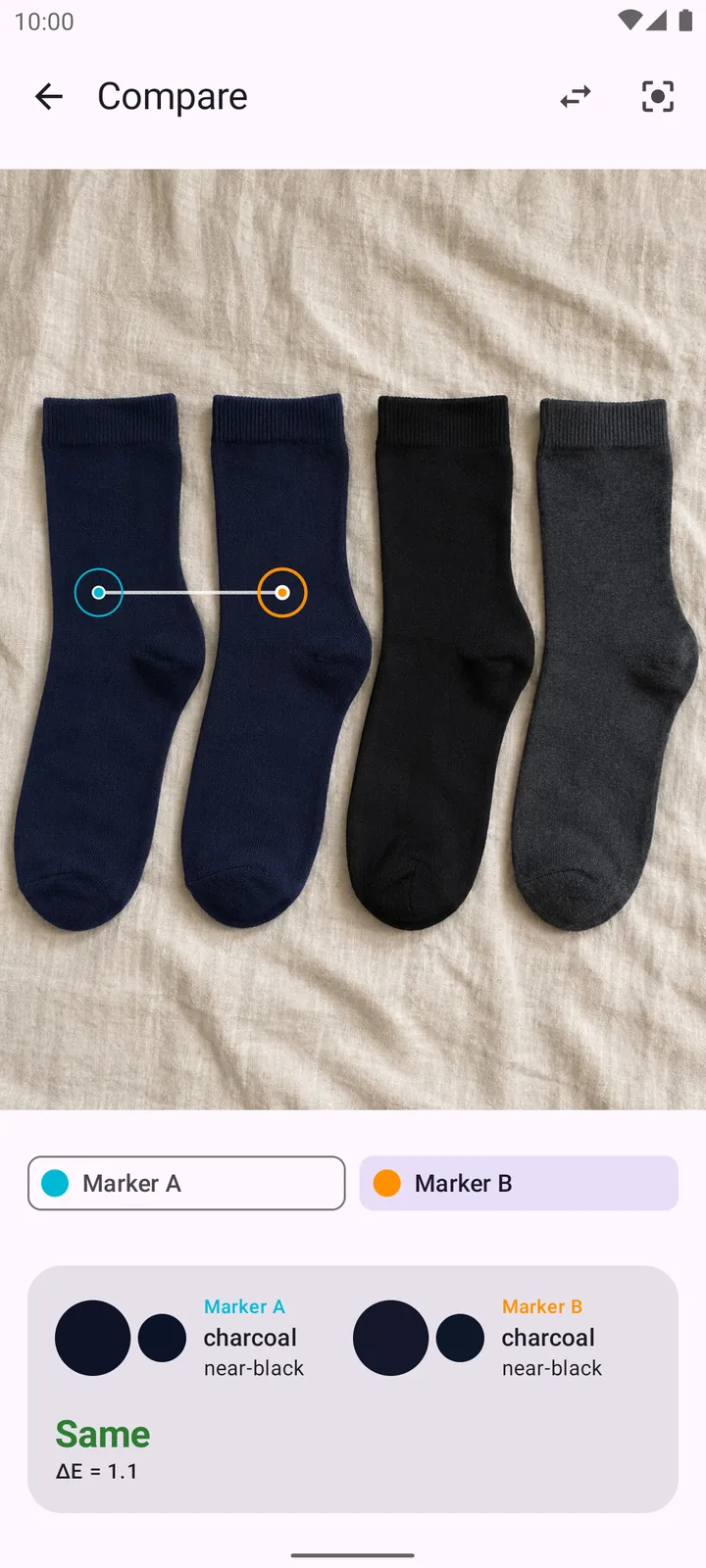
Do these socks match? Does this tie go with this shirt?
Two socks that may both be navy — or one navy and one black. A shirt and tie someone once said “clash”.
Color blindness rarely feels like a problem — until a specific moment: a pair of socks, a light on a charger, a chart in a meeting, a question from your child. Here are those moments, and what to do in each.
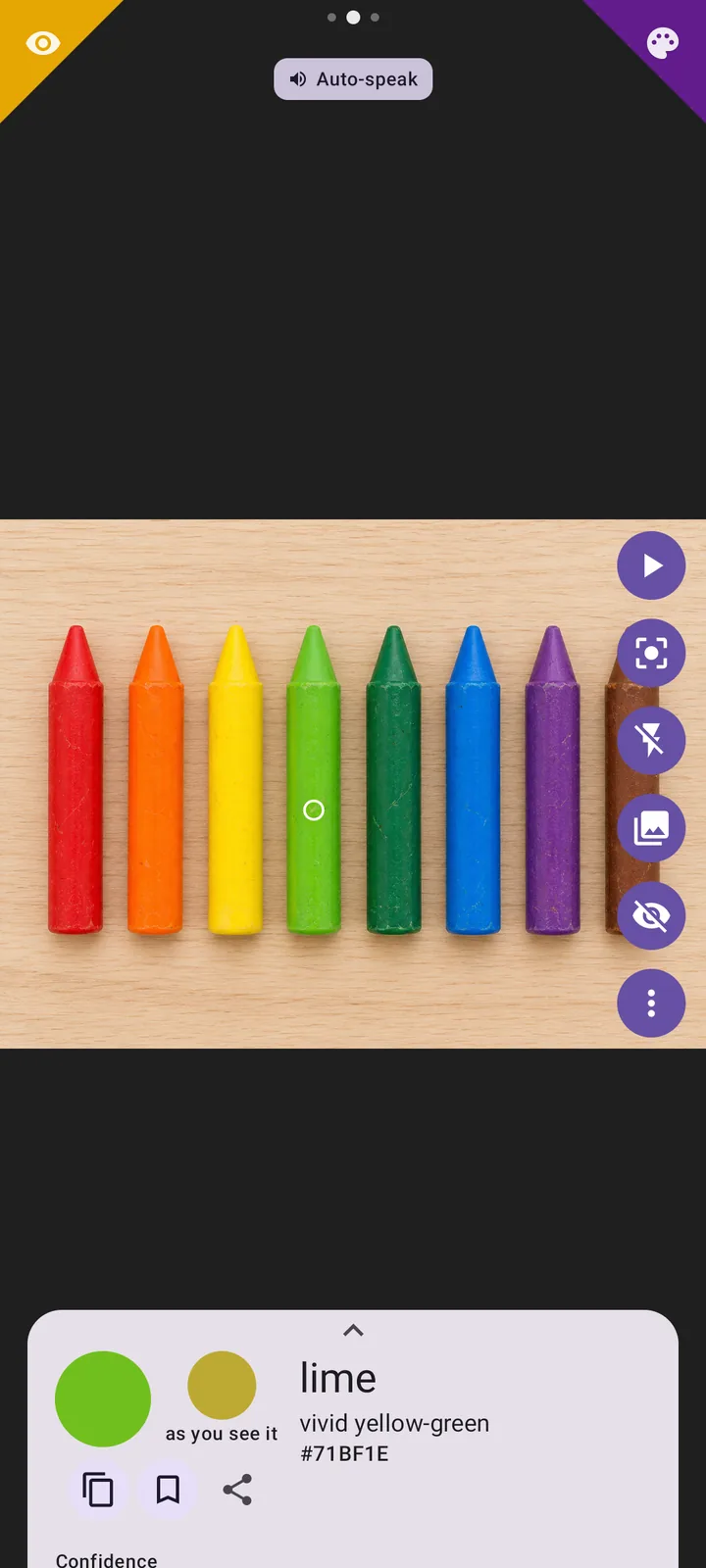
Color Identifier — the center screen.

Two socks that may both be navy — or one navy and one black. A shirt and tie someone once said “clash”.

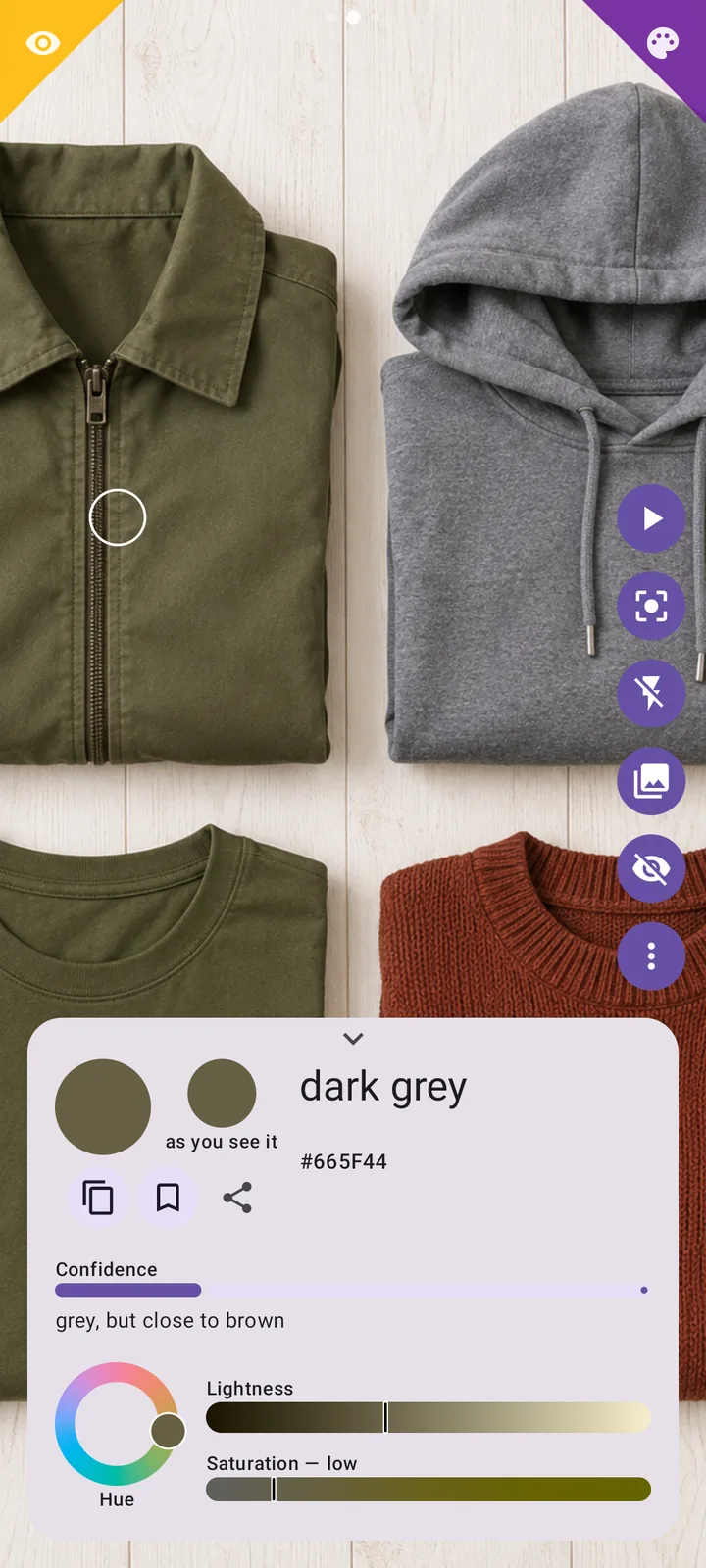
Store lighting is deceptive, product photos even more so. Is it khaki or grey? Will it go with what is already in the wardrobe?

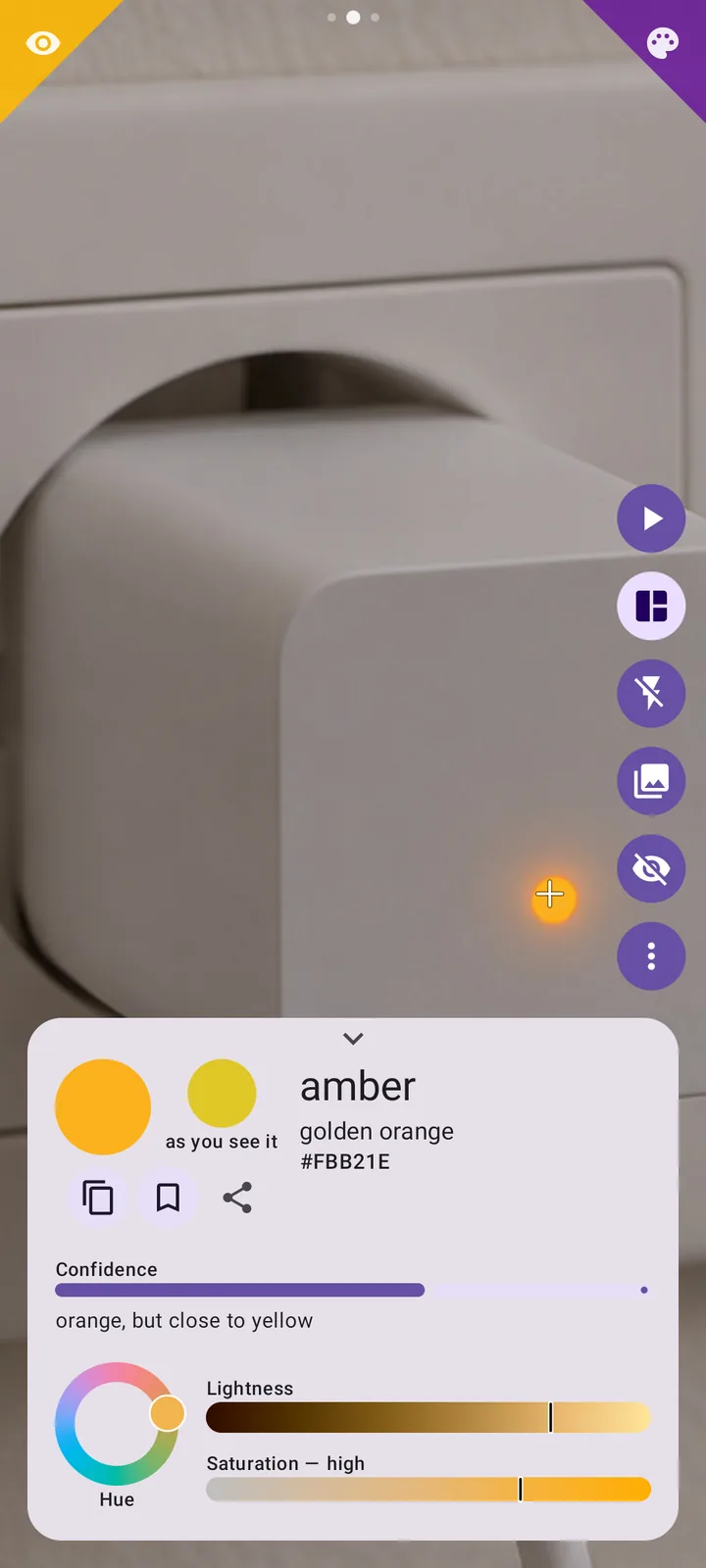
Tiny status lights are the worst offenders: charging or charged, error or OK — encoded in red, green and orange only. Colored wires are the same story.

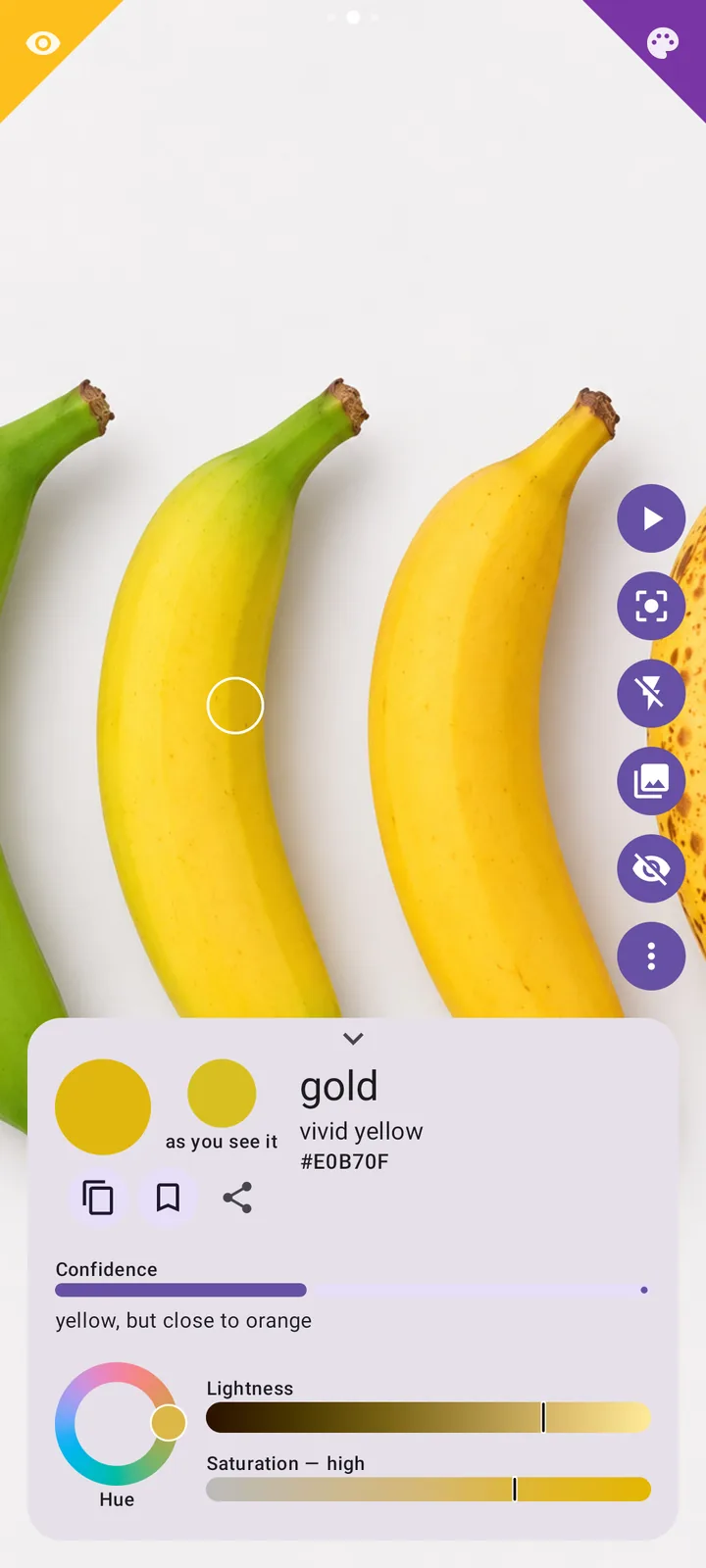
Bananas, tomatoes, avocados, meat — ripeness and freshness live almost entirely in color, exactly where red-green vision is weakest.

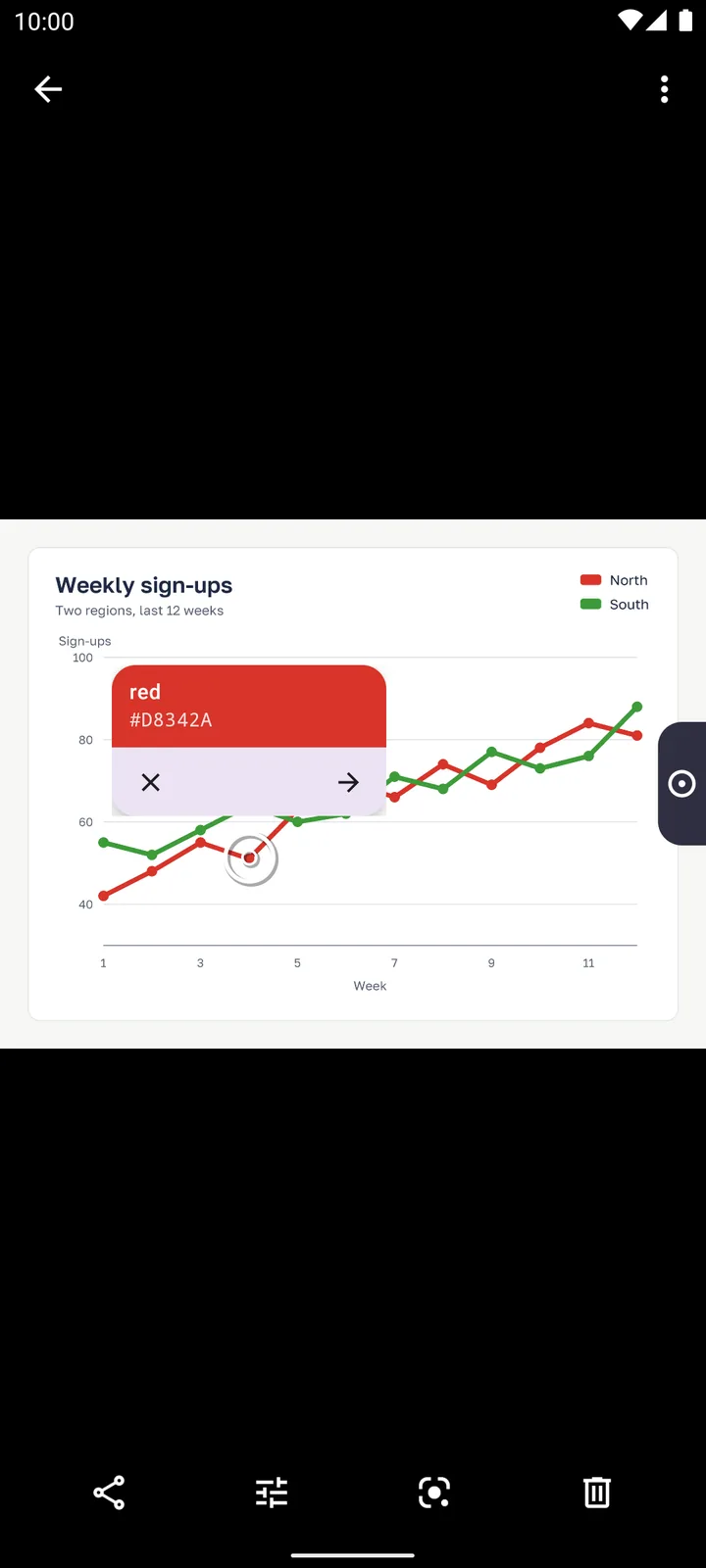
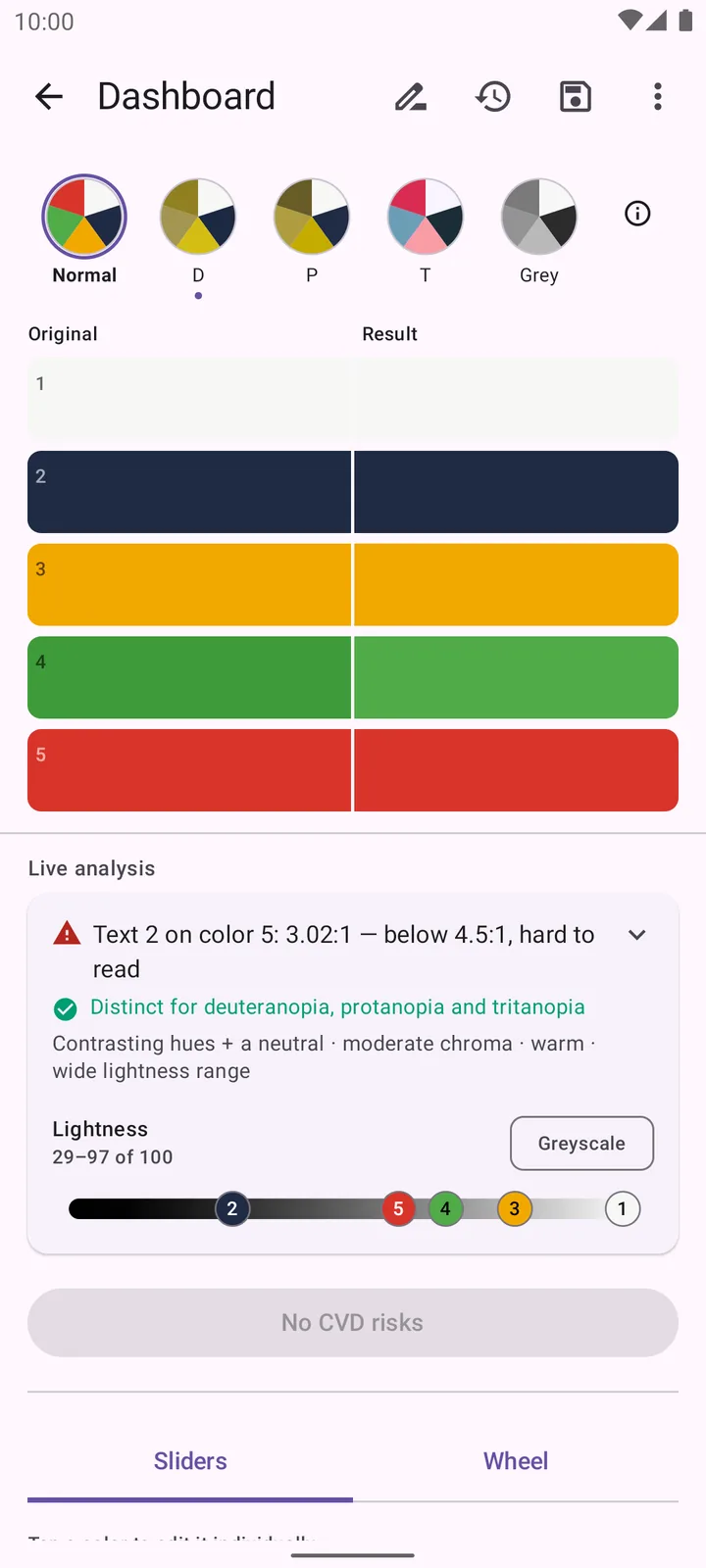
A red line and a green line on one chart, a heat map, a transit map, a status dashboard — most are made without color blindness in mind.

A colorblind parent with a curious toddler: the hardest simple question of the day.
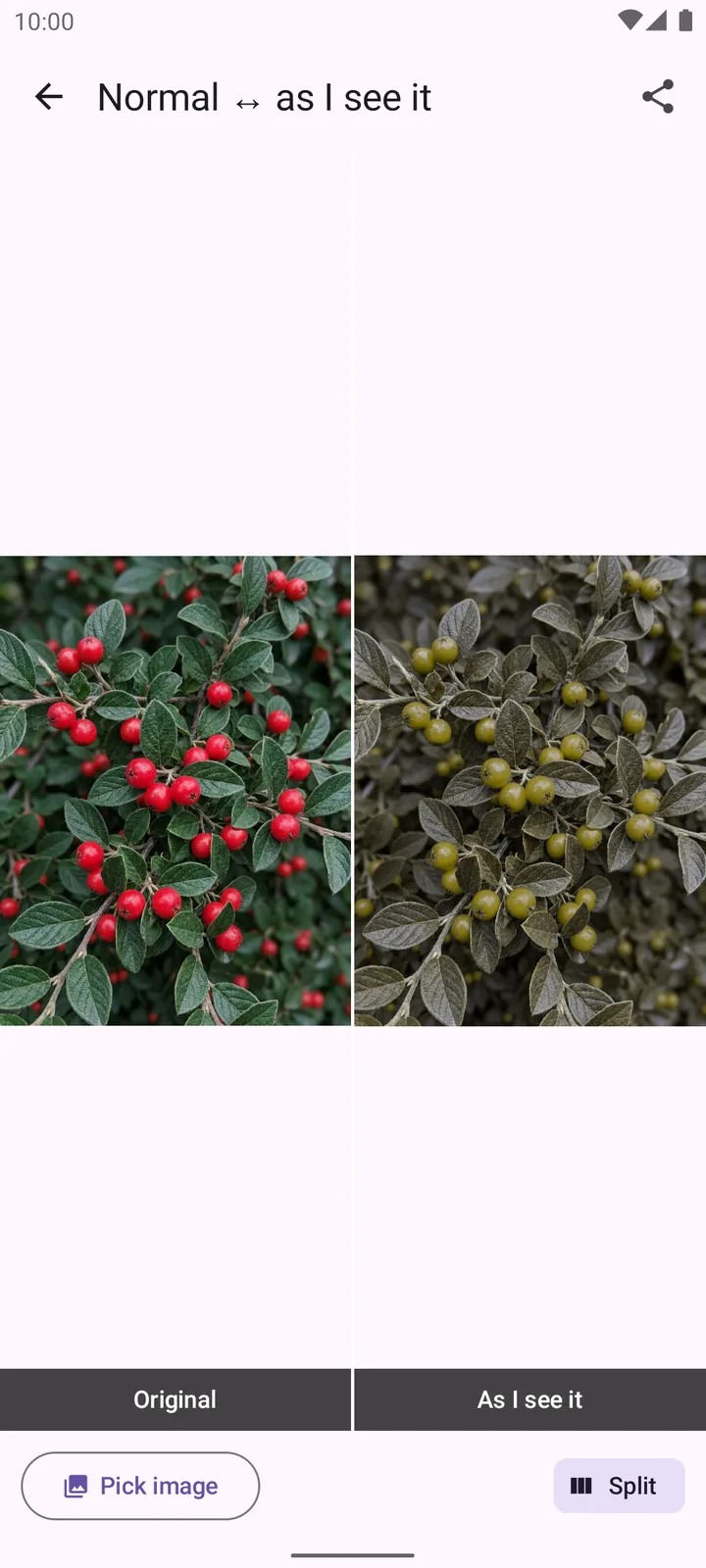
Through My Eyes — the left screen.

You have answered this a hundred times and words never quite do it.

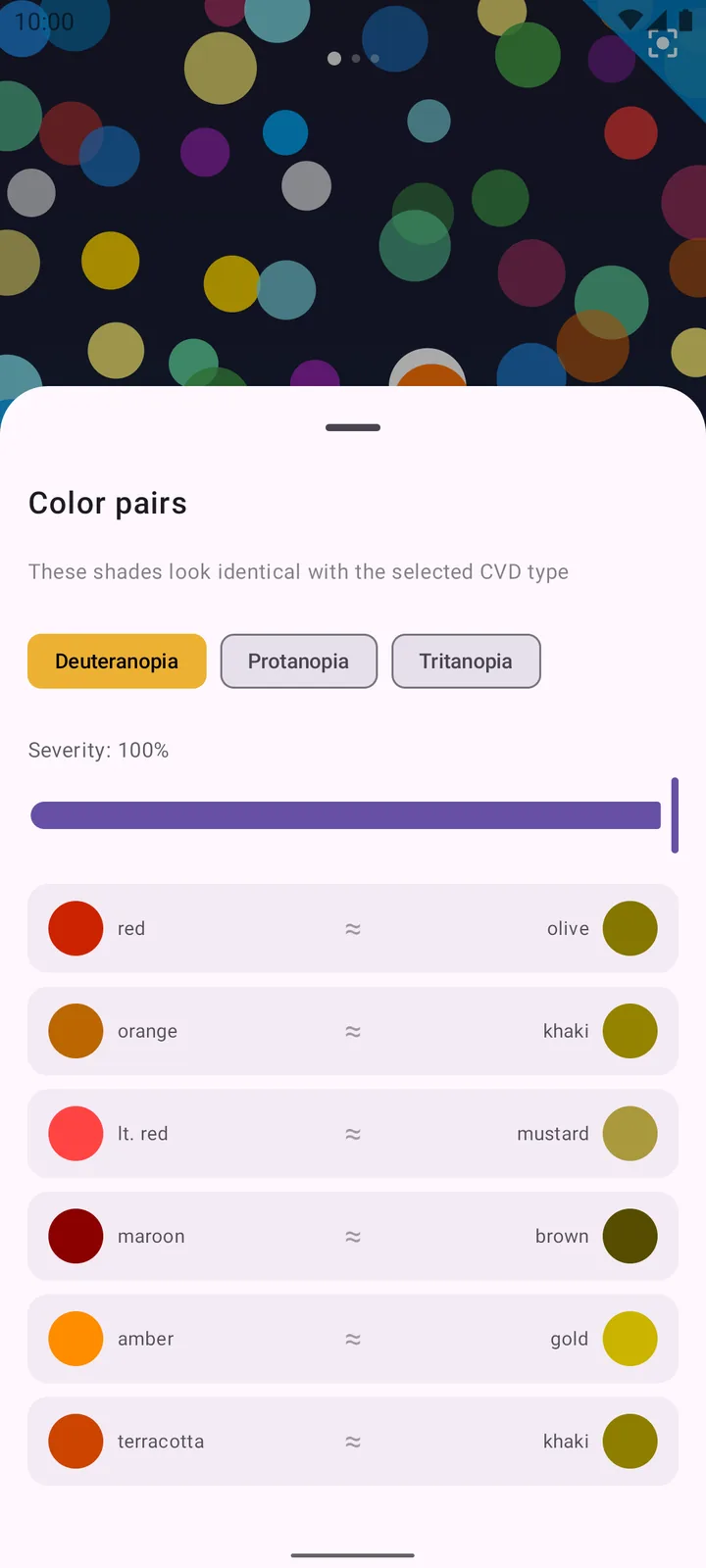
“Red-green” is too vague to act on. A teacher marking in red on green, a colleague coloring a spreadsheet — they need the specific pairs.

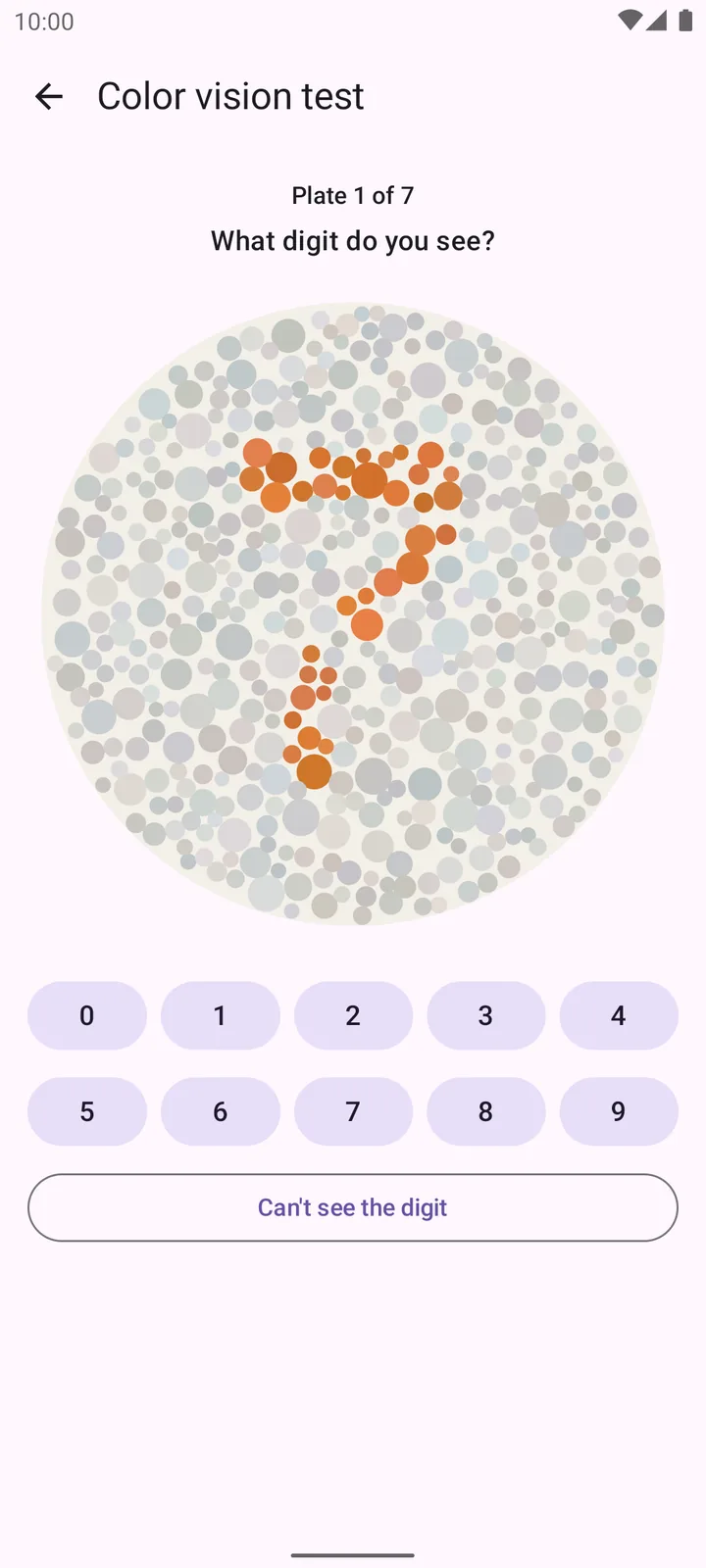
Many people know they “mix up some colors” and nothing more.
Design — the right screen.

About one in twelve men sees your red and green as nearly the same color. A status color, a button, a chart series can silently disappear.

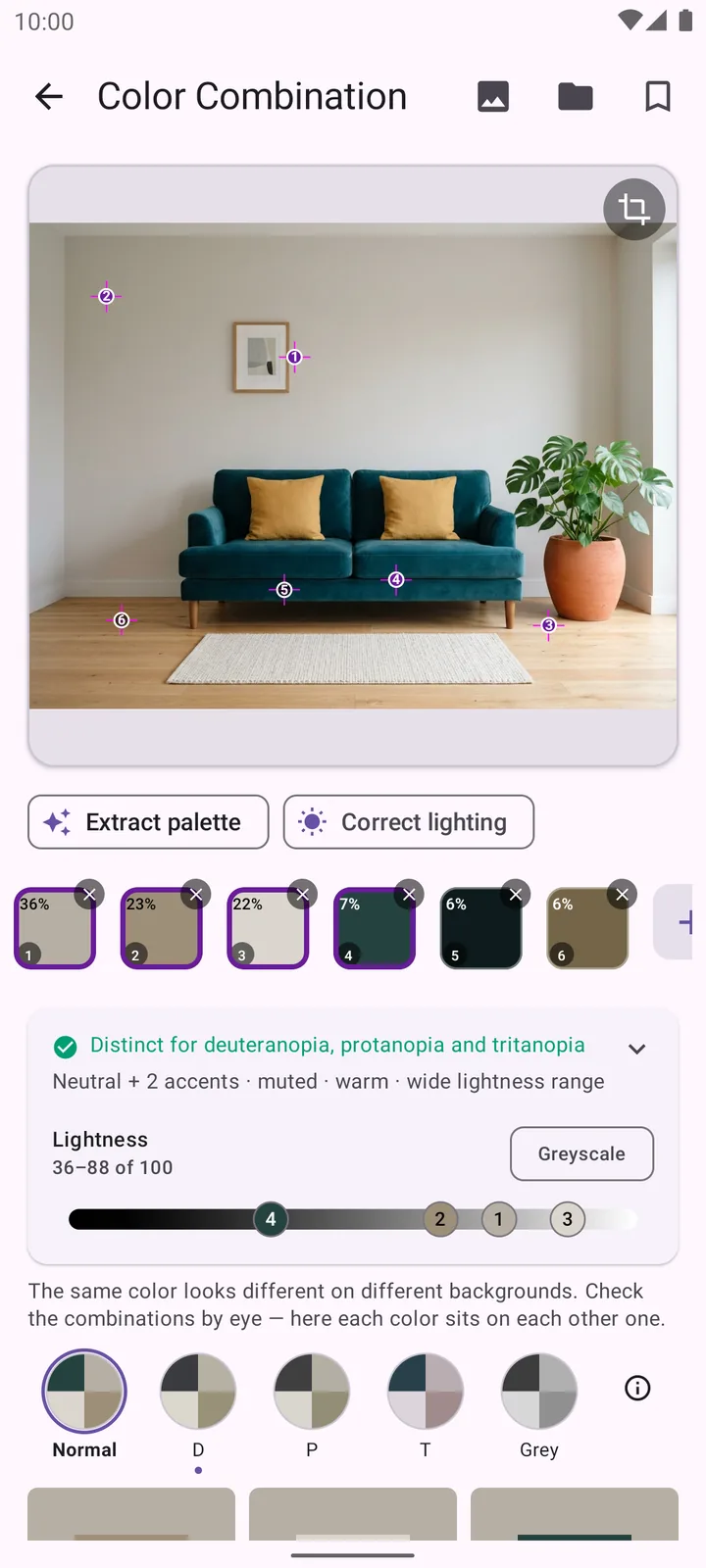
A photo of a room, a fabric, a street has a palette with real proportions — which is what makes it work.

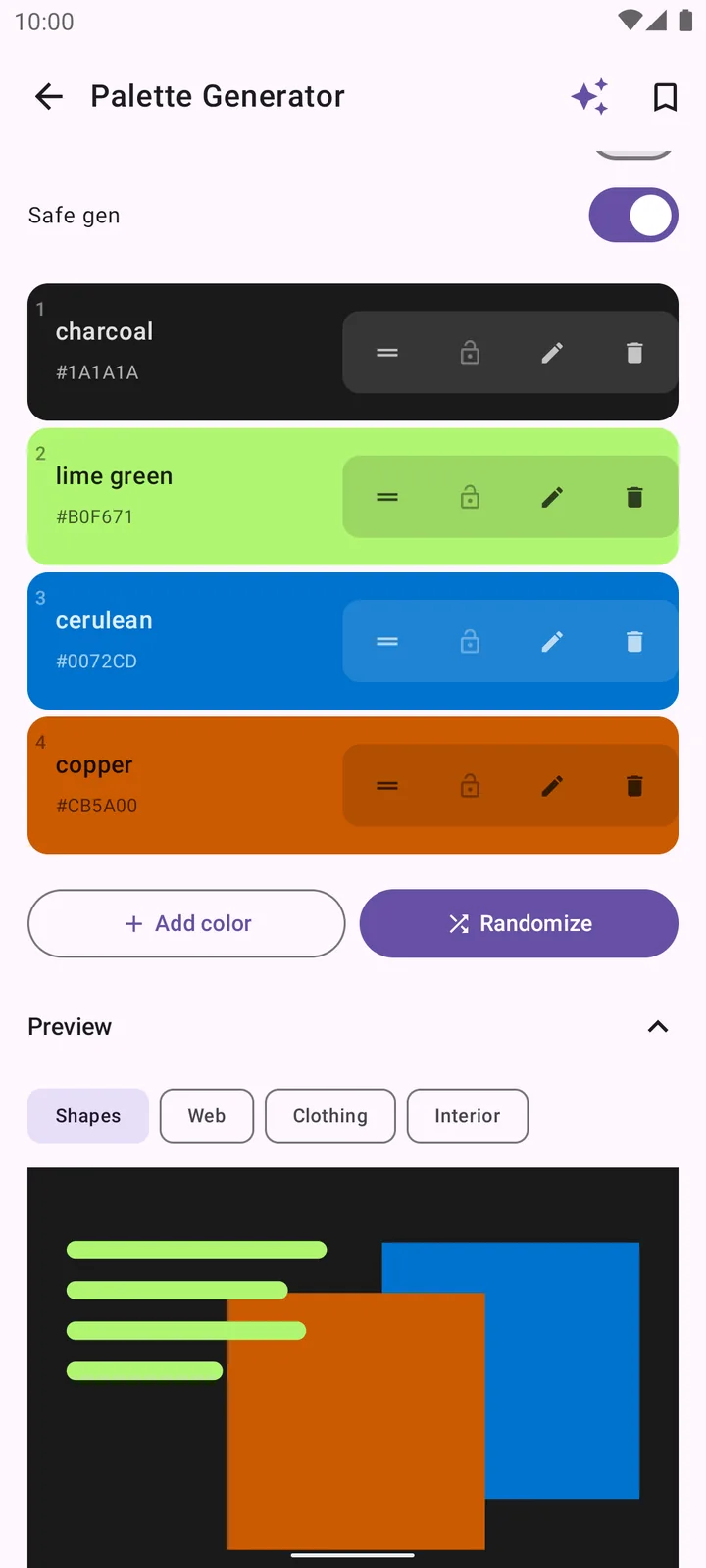
Six series in a legend, and for some readers three of them are the same.